
A Designer's Guide to Moving: What We Prioritized (and What We're Still Letting Evolve)
Our office still doesn't have wallpaper.
There's a beautiful House of Hackney print that was gifted to us, waiting to go up. But the walls need paint first, and we need to find the right rug, and honestly? It's been the lowest priority space in our 1930s Raleigh home. Some days, we sit in here surrounded by samples and swatches, helping clients create their dream spaces, while our own workspace remains unfinished.
If you're expecting designers to have camera-ready homes the moment they move in, you'll be disappointed. But if you've recently relocated — maybe to Raleigh, maybe somewhere else — and you're feeling pressure to have everything figured out immediately, you're in the right place.
When we moved from Boston to Raleigh, we had years of design experience to draw on. We also had the reality of becoming new parents, running a business, and navigating a major life transition. Those things don't always align perfectly. Here's what we learned about prioritizing design decisions when life is happening around you.
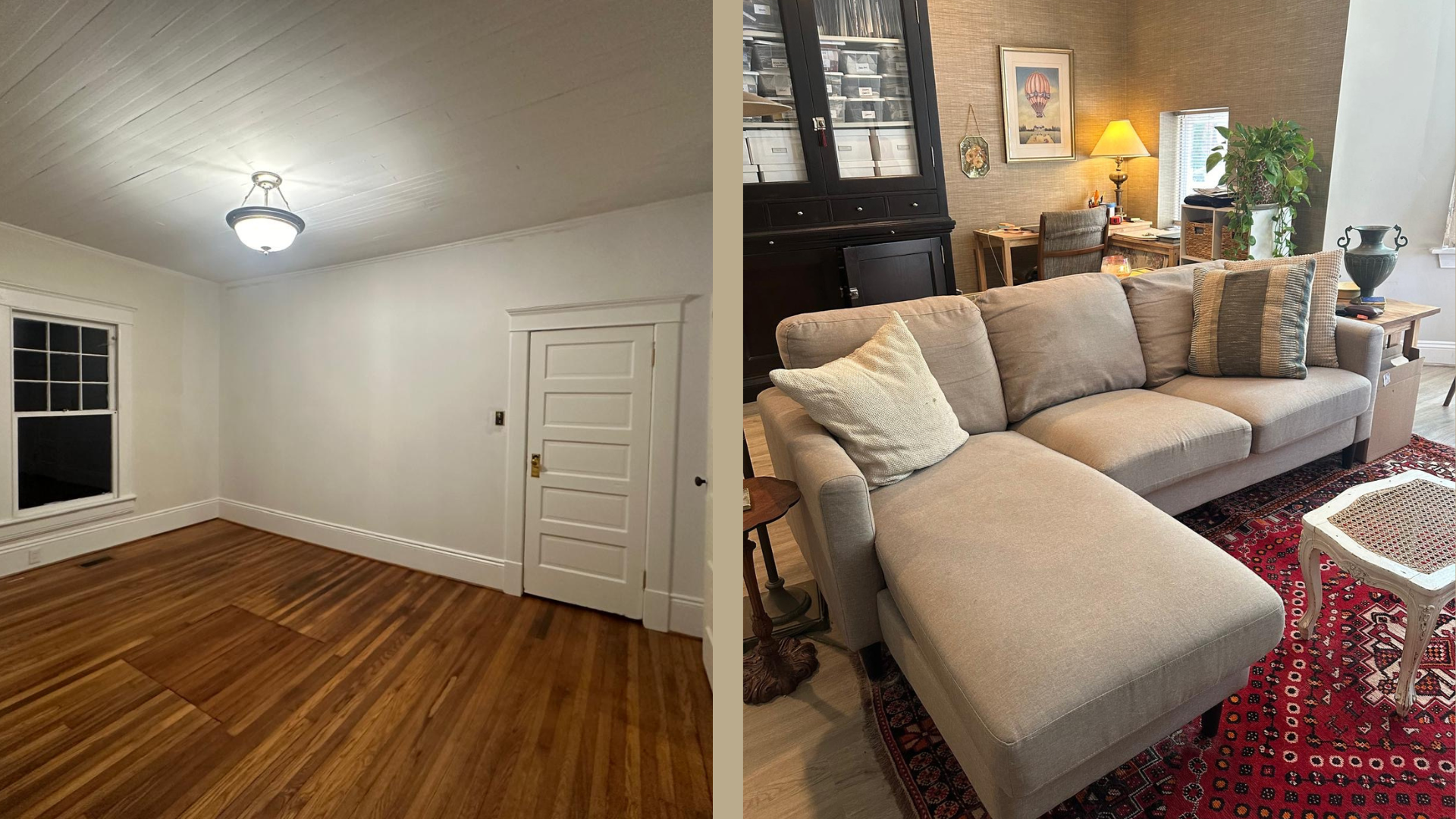
Our empty office (left) waits for the right pieces, a lesson learned from the uncomfortable Boston Wayfair sectional (right) we lived with for two years—filling spaces too quickly leads to compromises that stick with you.
Before the Move: When Planning Meets Real Life
Over the years, we've learned which pieces travel well: rugs, bedroom furniture, and chairs with good bones. That held true again. Rugs adapt to new spaces remarkably well. Our bed and nightstands found their place easily; they tend to work across different homes if you're not changing mattress sizes.
We brought a bistro table and chairs that landed in our kitchen, plus some curtains we repurposed. Beyond that? We left a lot behind.
Sofas and sectionals rarely transition well. Scale, ceiling heights, and natural light vary. Too much shifts from home to home. We see clients constantly disappointed by this. In Boston, we lived with a Wayfair sectional for two years because we knew the next house would be long-term. That sofa was uncomfortable and we hated it, but it taught us something important: when you buy furniture simply because you need something right now, you're almost always compromising.
Before the move, we ordered only the essentials: pieces that would support daily life the moment we arrived. Our sofa, so it would be there when we moved in. Window treatments, because you need somewhere to sit, somewhere to sleep, somewhere to eat, and some control over light and privacy. Those are the non-negotiables. Everything else can wait until you understand how you'll actually use the space.
Setting Priorities: What Helped Us Feel Settled
Our strategy was getting one or two rooms to a place that felt complete, not finished, but grounded. We left other spaces open to evolve. We focused on the living room first. With the main pieces in place pretty quickly, the house felt more like home right away, even with boxes stacked in other rooms.
Lighting became another early priority. We'd collected fixtures over time, knowing how much they shape atmosphere. Updating the electrical delayed installation, but changing out the lights made a huge impact. In older homes, especially, lighting transforms mood as much as paint color does. Once the fixtures were up, the entire house felt different, warmer, and more intentional.
There's a difference between "unfinished" and "in process." One feels chaotic, the other feels full of possibility. The living room had its essential pieces, which meant we could add to it gradually without feeling like we were living in chaos.
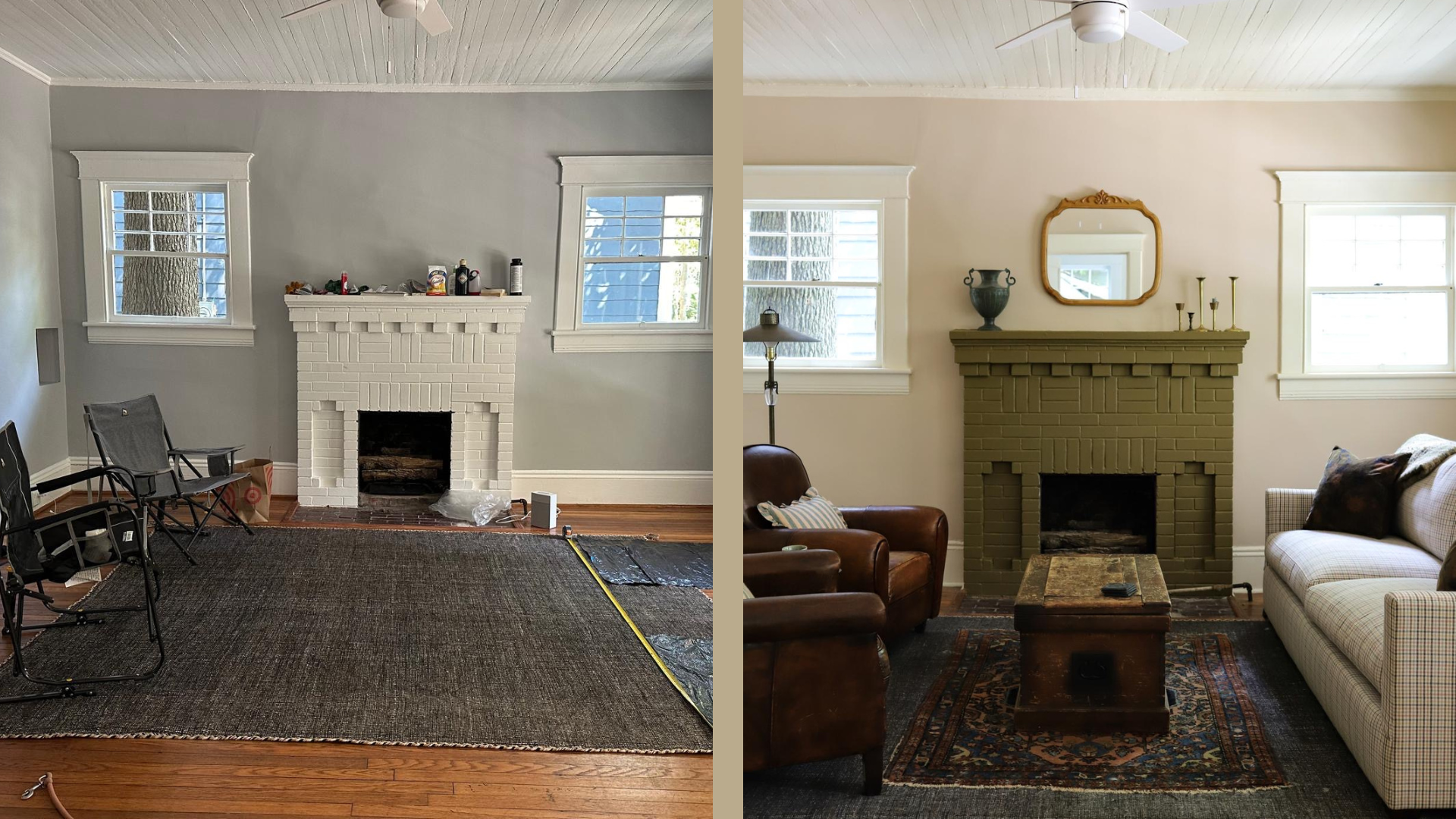
Living in a space teaches you things planning never could—after experiencing how the light moved through our living room, we painted the fireplace from white to olive, transforming the entire atmosphere without rushing the decision.
The Art of Letting a Home Reveal Itself
We're still looking for the right coffee table. What we have now is temporary, and that's fine. There are accent pieces we want: a console table in the dining room, maybe a bench at the end of our bed. But these aren't essential to daily life. They're the pieces we get to search for when we're out antiquing, things that can be special rather than rushed.
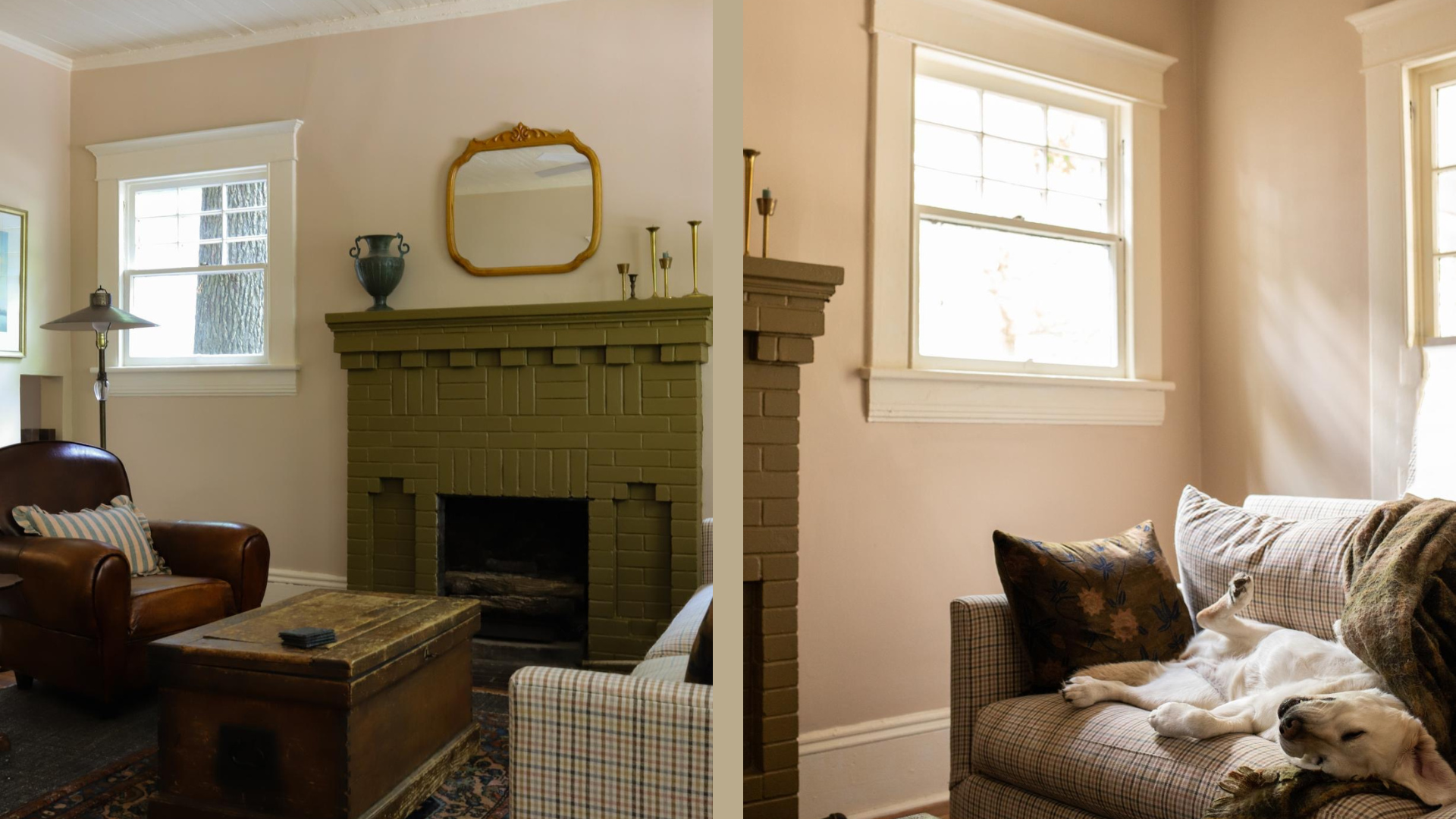
The living room was our first priority—getting essential pieces in place like our leather club chair and vintage mirror made the whole house feel more like home, even with boxes still unpacked in other rooms.
Living in a space teaches you things planning never could. You can estimate what the light will do at different times of day, but actually experiencing it changes everything. You might discover that one room gets all the good morning light, and that's where you want your coffee spot. You can't know that from a floor plan; you have to live through a few weeks of mornings.
We're approaching two years in this house, and we're comfortable with projects still unfolding. That's intentional. When something is done right, we love it without regrets. If we rush just to finish, we’re far more likely to wish we’d waited.
Learning Through Experience: What This Taught Us About Client Work
Designers make imperfect decisions, too. That Boston sofa taught us not to underestimate how much a single piece influences how a home feels. We had a tight timeline, didn't plan ahead, and ended up with something that made us cringe for two years. It shaped how we approached this move and how we work with clients now.
Most design regrets grow from urgency. You fill a room because emptiness feels uncomfortable, or you need something in the first week, and you're limited to whatever ships fastest. Those compromises stick with you. This time, we gave ourselves permission to leave things incomplete rather than filling spaces with placeholder pieces we didn't actually want.
That experience, living in a house that's not complete, is unsettling, especially when you have kids and want things set up for them. That feeling can push you toward decisions you'll regret. When we work with clients in transition, we help them understand that clarity doesn't come from rushing. Homes aren't meant to be completed in a week.
We focus on the elements that support daily life now and give everything else time to take shape. With a longer runway, we can source things that feel more specific to them, rather than whatever is available immediately.
When clients move to Raleigh, we also encourage them to connect with a designer before calling contractors. A contractor can't accurately bid without understanding the design vision, and the right design plan prevents expensive changes later. We've built a trusted network of local craftspeople: upholsterers, muralists, cabinetmakers, and electricians. Because we went through this personally and were particular about who we chose for our own home, our clients benefit from that network.
Adapting a Design Identity to Southern Architecture
We didn't overthink translating our aesthetic to Raleigh. We let our 1930s house guide the design. There's a casualness to it that fits with how we approach interiors: cozy, layered, collected.
Raleigh's historic homes tend to be less ornate than those in Chicago or Boston, and we struggled to find older homes with the architectural details we were drawn to. Chicago has an incredible depth of historic inventory. Grand homes that were built for wealthy families but aren't necessarily sold at premium prices anymore. Raleigh’s historic homes feel more modest, often built with simpler trim and straightforward details.
But straightforward doesn’t mean less interesting. Southern light changes everything. It's softer and more enveloping than Northern light, making rooms feel warm even when the palette leans atmospheric. That quality invites a different approach, spaces that balance coziness with ease.
The climate influenced some choices. We didn't want rooms that felt too dark and heavy for North Carolina's warmer weather, but we also didn't want to lose the layered aesthetic at the core of our work. We chose colors and textures that work across seasons: warm neutrals, tactile fabrics, grounded hues that feel inviting in winter and comfortable in summer.
Where Things Stand Now
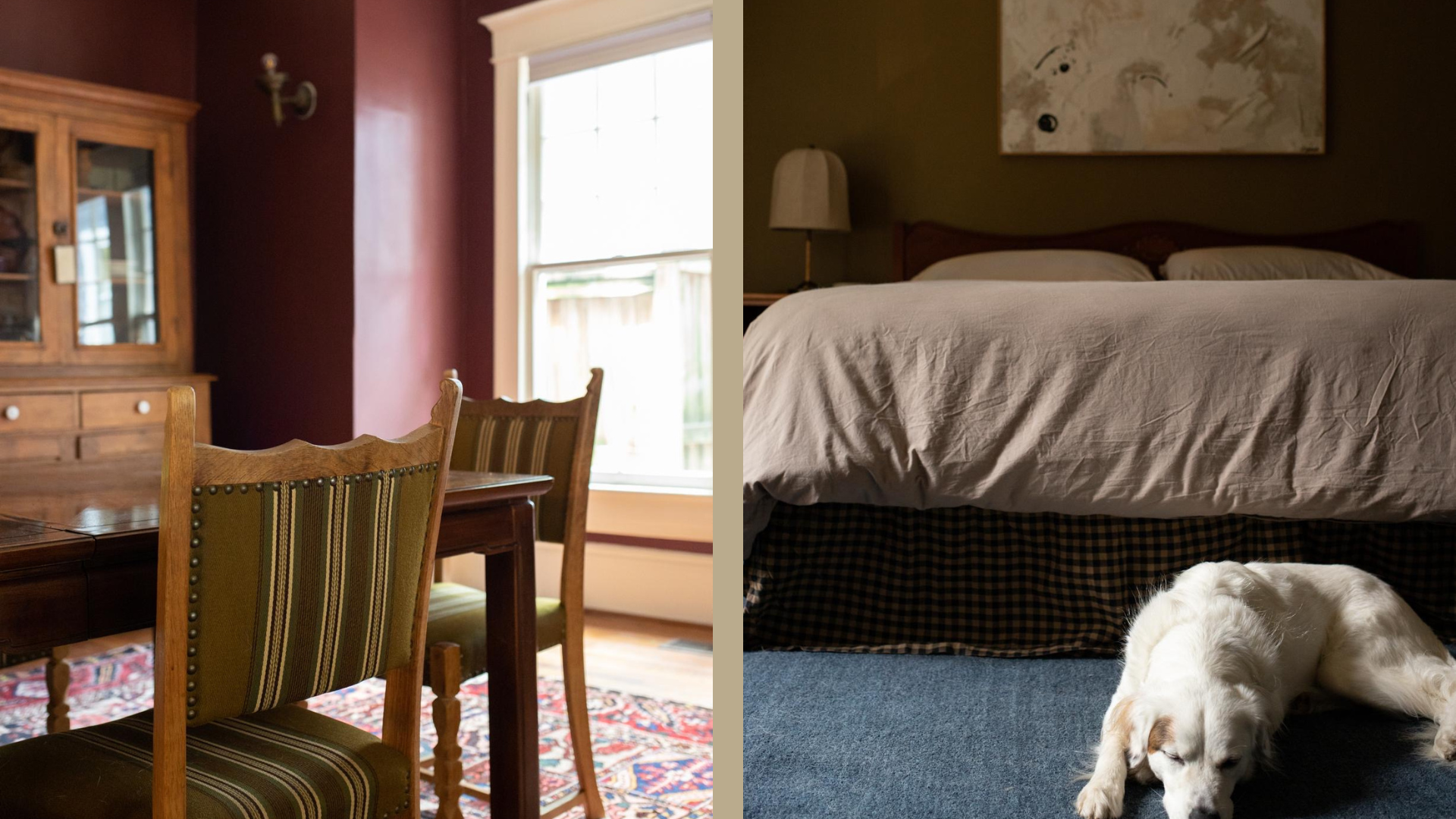
Our dining room's rich burgundy walls and vintage striped chairs (left) and bedroom's grounded olive tones with layered textiles (right) show how we prioritized spaces that felt complete early in our move, even while other rooms waited for their perfect pieces.
If you're moving into one of Raleigh's older homes, plan for system updates before decorative ones. We replaced a water heater right away and updated the electrical system soon after. Set aside money for those immediate improvements to make it livable before you tackle the fun projects.
Beyond that, give yourself time. Live in your rooms a bit before making major decisions. You can't know how you'll use a space until you've actually spent time in it. A home reveals its best ideas slowly.
Our living room feels layered and settled. The bedroom is warm and grounded. The office waits for its wallpaper moment. The perfect coffee table is out there somewhere, and we're happy to let it find us.
Homes are never truly finished. They shift as our lives shift. They collect our stories. They change alongside us, and we find that comforting. Patience in design isn't hesitation, it's how you gain clarity. It's how a house becomes your home, not just a place you're trying to "finish."
If you're new to Raleigh and feel overwhelmed by the process of shaping your home, take a breath. You don't need every answer right away. Start with what supports your life now. Let the rest come in its own time.
And if you're ready to think through your home with intention, with a team that understands layered, collected interiors and the reality of designing through transition, we'd love to explore what's possible with you.