
How to Make a Brand-New Home Feel Old — In a Good Way
Building your dream home? Here's how to give it the age-old soul that most new construction is missing.
There's a certain magic you find walking into an old house — the creaky floors, the ornate moldings, the sense that the walls have seen things. But how do you add that character to a new construction home? Does a custom new build have to feel, well…new?
Not if you're intentional about it. Here's how I approach designing custom-built homes across Raleigh and beyond so that 10 years from now, it still feels timeless.
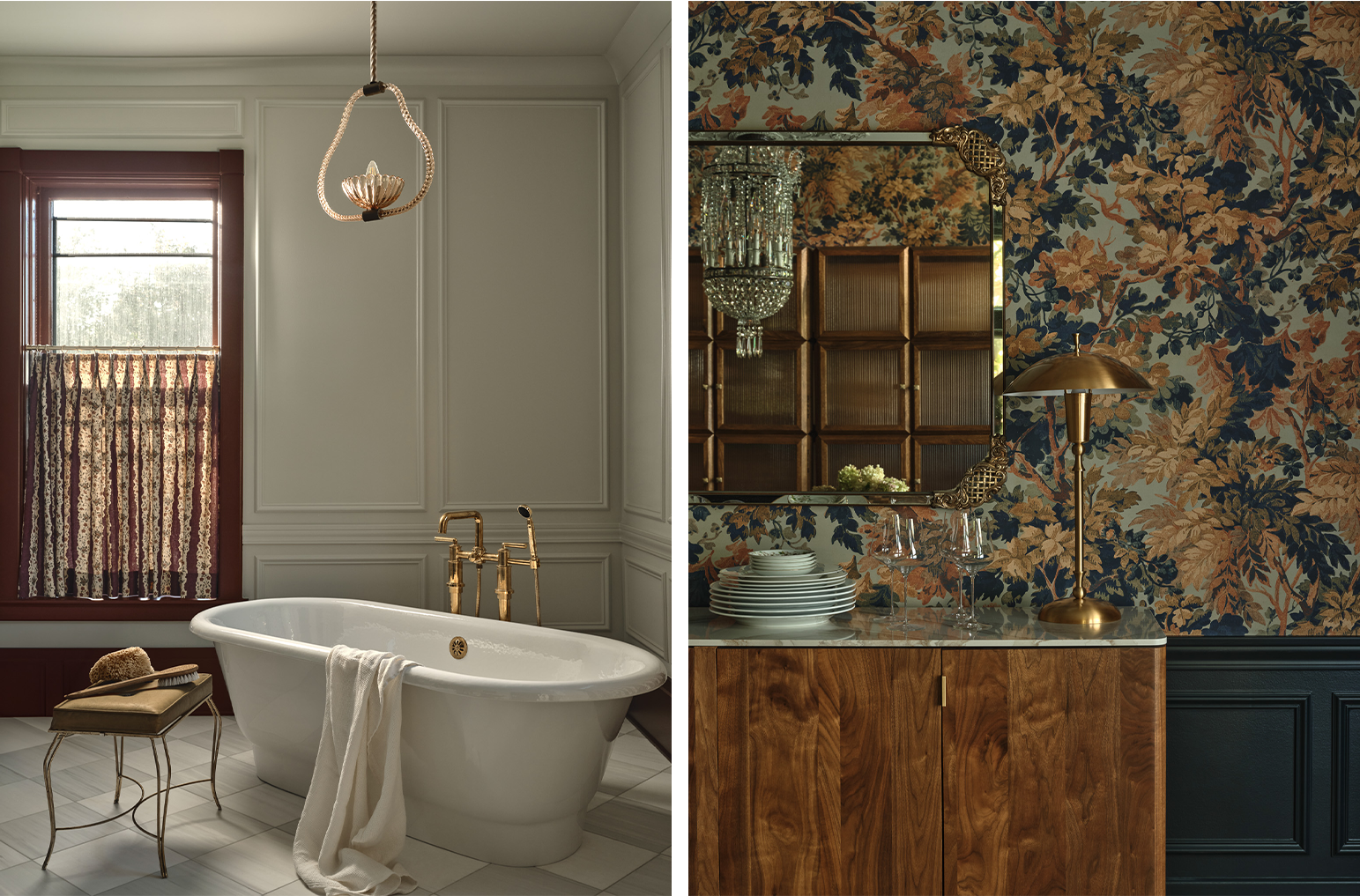
The chair rail height, profile, and applied moldings carry seamlessly from the dining room into the primary bath — an example of a consistent design language that makes every room feel like it belongs to the same home. Photography by Madeline Tolle.
Start with a Consistent Design Language
Before you select a single tile or light fixture, establish your overall design direction. That will inform every other decision. If your architect is designing a more traditional exterior, the interior should tell the same story. That means thinking seriously about millwork: the profile of your window casings, the scale of your base molding, the presence (or absence) of crown molding from room to room.
Don’t let that make you feel boxed into a certain style though. Consistency doesn't equal uniformity. Historically, the grandest rooms in a home — the formal living room, the entryway — had the most impressive architectural detail, while bedrooms were streamlined and kitchens were tucked away. You can apply that same logic to your home based on your lifestyle. Maybe you spend the most time in the kitchen, so it earns elaborate millwork. Maybe your primary suite is your sanctuary and deserves extra attention, even if it’s appreciated mostly by you. The point is to make intentional choices, not default ones.
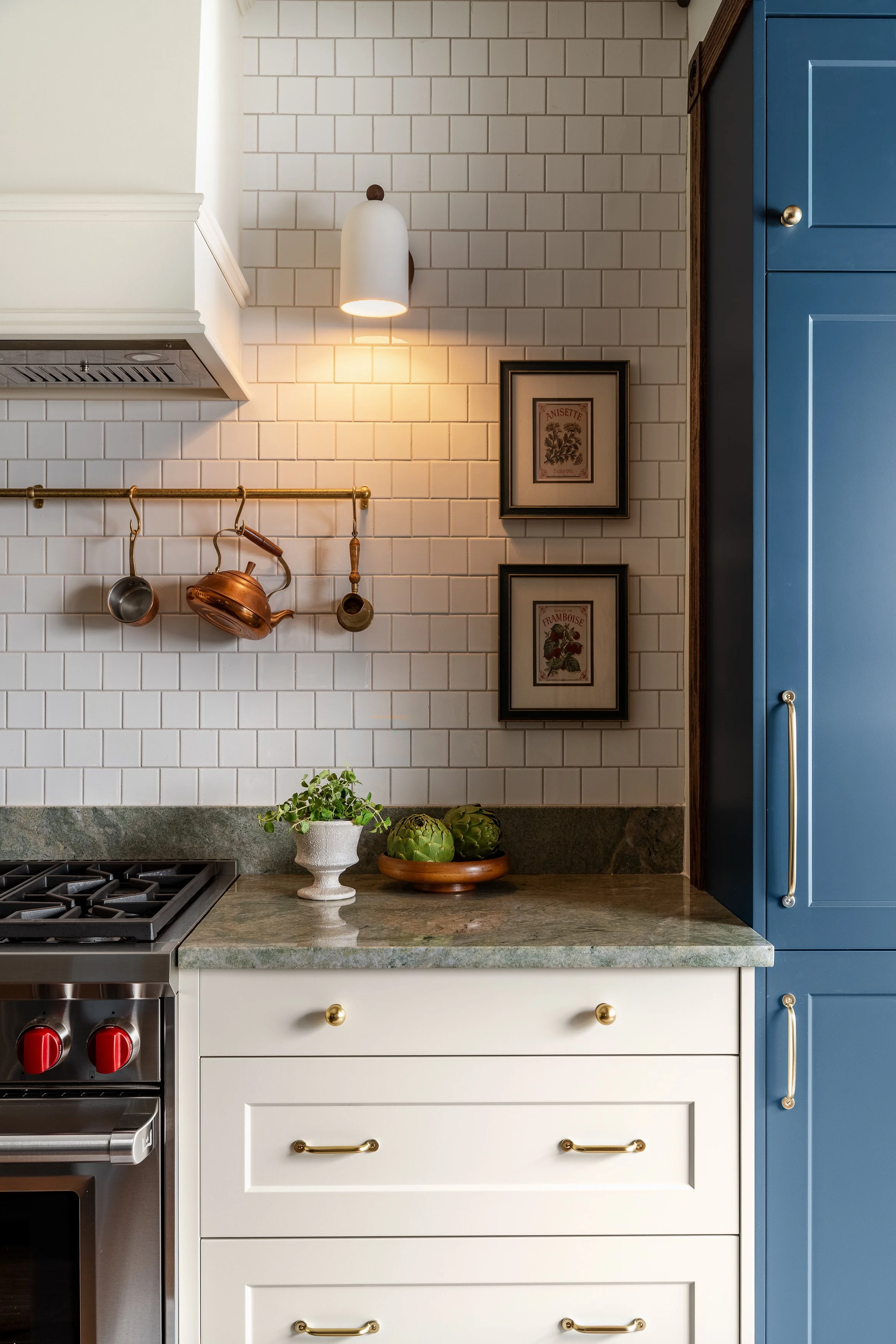
Natural stone countertops and handmade ceramic tile are materials that only get better with time. Photography by Capture Studio.
Lean Into Natural Materials
Excuse me while I step up on my soapbox. If there's one hill worth dying on while designing a new build, it's this: insist on natural materials. If you’re asking yourself, “What materials age well in a new home?” the answer is always stone, handmade ceramic tile, leather, wood, and unlacquered brass. These materials only get more beautiful as hands touch them, feet walk on them, and pets find their new favorite sunspots. Patina is the point. Natural materials tell a story over time in a way that synthetic or mass-manufactured finishes simply can't.
There are some things you genuinely can't fake in a new home, though. Wood floors that have been walked on for 100 years have a depth and character that no stain can fully replicate. But you can make choices that set your floors up to age gracefully, like interesting laying patterns like chevron or herringbone, border details that echo historic homes, or richer stains that let the natural variation in the wood come through rather than flattening it.
Get Specific About Lighting
Lighting is where a lot of new builds quietly go wrong. It's tempting to pick a cohesive suite from a single brand and call it a day, but that tends to read as a little too coordinated, a little too showroom-y, and a lot too soulless.
Instead, think about sourcing vintage fixtures and rewiring them if necessary. A mid-century sconce in a powder bathroom or an antique chandelier in the dining room go a long way to adding age to a new house. These are the kinds of finds that start conversations and give a home its personality. The goal isn't to be matchy-matchy; it's to create a layered lighting story that feels curated over time. (Even if it was all decided in a single design meeting — shh, no one has to know!)
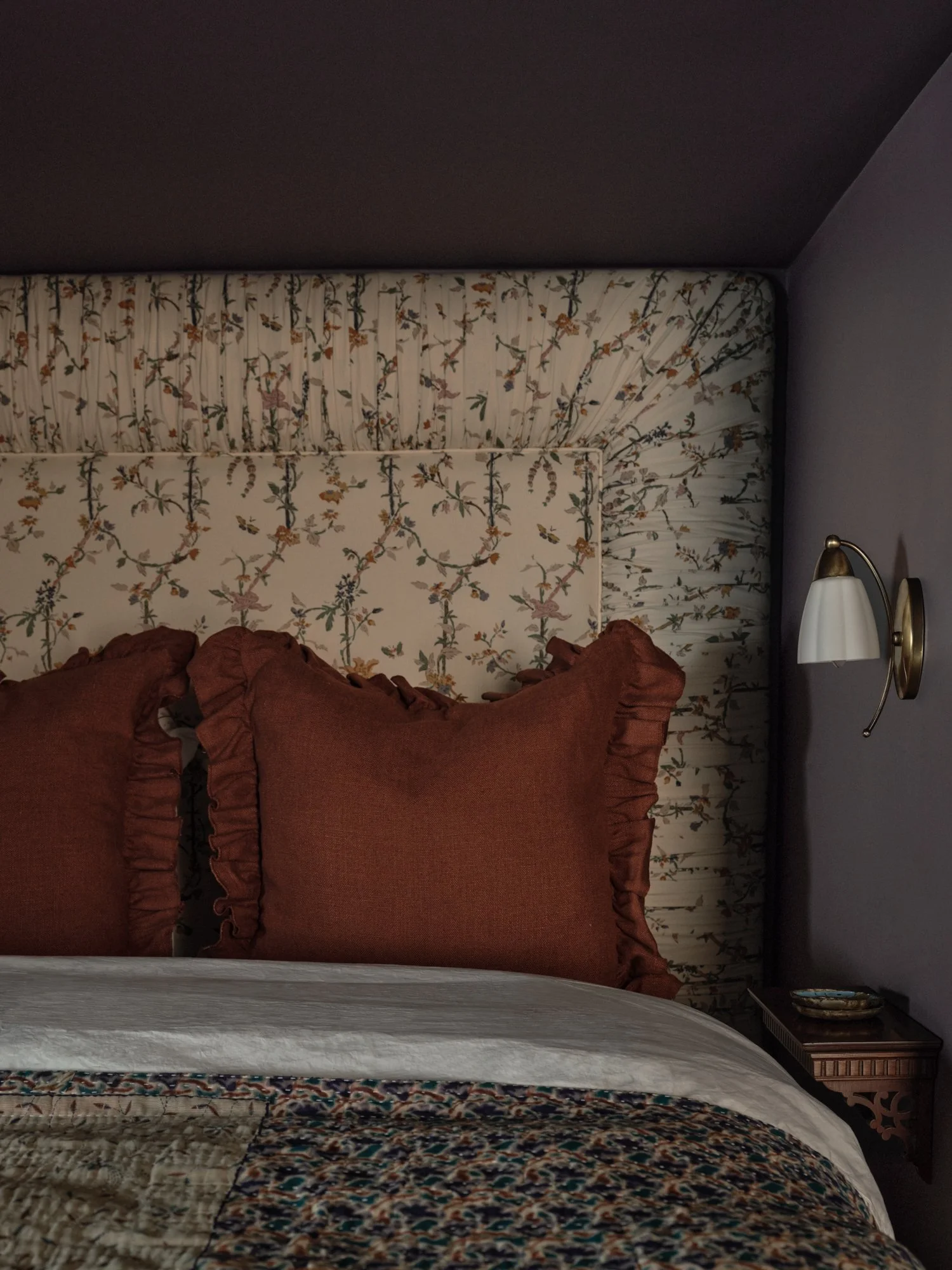
This vintage sconce was sourced in Zurich, Switzerland and rewired for this guest room. Photo by Madeline Tolle
Don't Forget the Architecture of the Rooms Themselves
Open-concept living is here to stay, and for good reason. People want to be cooking in the kitchen and still see their kiddos playing in the living room. But the old homes we crush on also boast room definition. Historic homes had rooms with purpose, and that sense of enclosure is part of what makes them feel so layered.
The solution? The cased opening. A large, well-proportioned doorway between spaces gives you flow without sacrificing the sense that you're moving through distinct rooms. It's a small architectural choice with deep historical roots and an enormous payoff — one you’ll thank yourself for years from now.
Build the Right Team, in the Right Order
I’ve often been asked, “When should I hire an interior designer for a new build?" The answer: earlier than you think. Who you bring on first matters. A lot of clients go to the builder first, but the builder (a good one, at least!) can build anything — they'll follow whatever direction they're given. The smarter move is to start with the people who hold the creative vision: your architect and your interior designer.
Ideally, bring your interior designer on at the same time as your architect, not after. An interior designer is thinking about furniture scale, door swing locations, how a room actually lives — and those details can get locked in if no one's thinking about them early enough. When your architect, designer, and builder are already in a working rhythm together, the whole project runs more smoothly and the result is more cohesive. To really pay off the full vision of the home, you need that consistent creative eye all the way through to furnishings.
Bring in Old Things
Just because your house was built in 2026, doesn’t mean you need to fill it with 2026 things. This is one of the most accessible ways to add character to a new construction home, and honestly one of the most fun.
Think of your interior as two distinct layers: the architecture (like millwork, finishes, built-ins) and the furnishings. These two layers don't have to speak the same language, and in fact, they probably shouldn't. An old home with traditional architecture can feel like a time capsule if every furnishing matches the period. Mix a worn leather chair that belonged to someone's grandfather (maybe even your own!), an authentic mid-century sofa, an interesting geometric rug, and a landscape painting picked up at an estate sale. Voila! We’ve got something really interesting. That magic happens when there is some juxtaposition.
Building new doesn't mean starting soulless. It means you have a rare opportunity to make every single choice, and the homes that age beautifully are the ones where those choices were made with intention. Natural materials that patina, millwork that tells a story room by room, lighting with personality, a carefully chosen mix of old and new items, and a team that shares the vision from day one. That's how a brand-new home earns a sense of history before it's even lived in.