
The Value of Hand-Crafted Interiors in the Age of Artificial Intelligence
If your friends are anything like mine, you’ve been sitting around a lot of tables talking about the impacts of AI. We’re hypothesizing whether or not our industry will be wiped out, or more specifically, our actual jobs. We’re wondering what it’ll be like to raise kids in this new world. People are taking sides— they love it or they hate it.
I’ve certainly been using it in my workflow— and for administrative stuff it’s great and makes me more efficient. For design-related prompts, it still has a long way to go, but I can imagine a future in which it can draft plans, render rooms with amazing accuracy, and even create an entire design for you. So I ask what everyone is asking: will it put me out of a job?
For a long time, we have assumed creative fields were insulated from robot domination. How can a robot be creative? Well, it’s true that the robot can only pull from references already out there, and not create something truly new, but isn’t interior design work often a regurgitation of many other pieces of work already in existence? How often is something truly new? And perhaps the consumer doesn’t care too much about a wildly novel home, but just wants something that generally reflects their taste and how they want to function in their home, especially if the price tag is much more attainable than hiring a designer.
Hopefully, it’s not naive wishful thinking, but I do believe there will be an even stronger need for a human designer in the AI future. Here’s why.
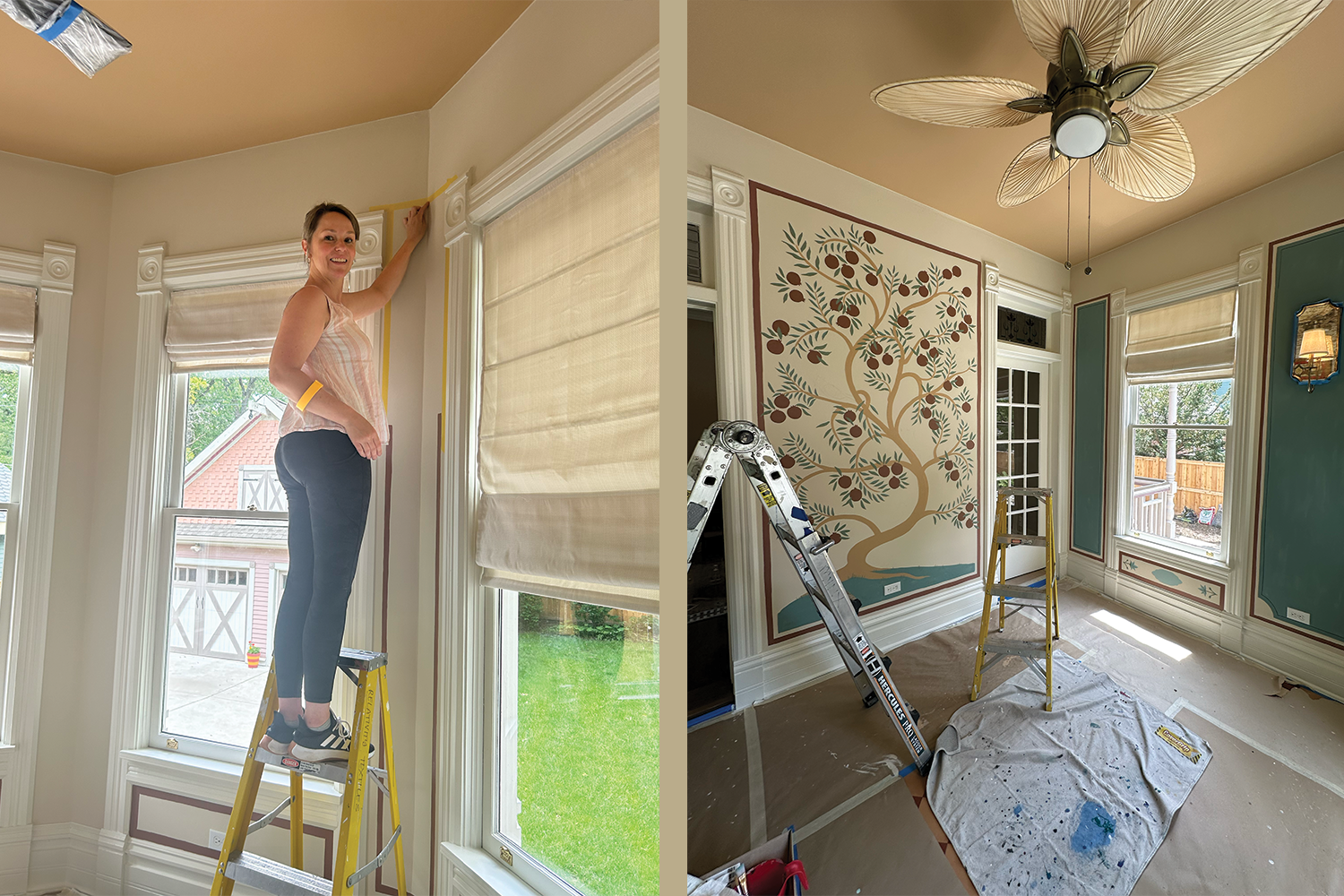
Erin Minkley of Relativity Textiles creates hand-painted mural in River Forest sunroom with specific details included to showcase the clients passions.
A Desire for Hand-Crafts in Your Home
While some love a high-tech home and always will, there will be others of us, myself included, are on the opposite side of the fence. I see a purpose for some automation in your home (i.e. motorized shades) but the technology changes so quickly and can require more maintenance over time. For me, I want the hand-operated option every time. I want to flip the switch, lower the shade. I want to operate my home in a mechanical way. We tried Alexa for a season, but that girl has been long evicted.
As our workplaces and communication with one another becomes more automated, I believe we will want our homes to feel more human than ever.
One of the things that is most fulfilling about my work is partnering with craftspeople in a variety of industries to create together. When the budget allows, I love to incorporate custom furniture made by a talented group of carpenters and upholsterers at a local workroom. Let’s have your window treatments sewn by Cindy, your cabinets built by Ted. These are not mass-produced items, but a human actually put tools to hand and made them for your home. The end result is a space that is uniquely yours, made for you and your family, and irreplicable.
Design Has to Be Executed in 3D
This is a non-negotiable. AI cannot come walk into your old home and evaluate how to handle the spacing of the vanity next to your non-plumb wall. It cannot see how a specific paint color bounces light at different times of day to make a final selection. It cannot hold your cat’s paw to a fabric sample to see if it’s interested in clawing through it. AI cannot make the hundreds of daily decisions that pop up in the execution phase of a construction project. Someone has to actually bring the design to life and that person needs to be able to feel and touch and see all the intricate details of your home in order.
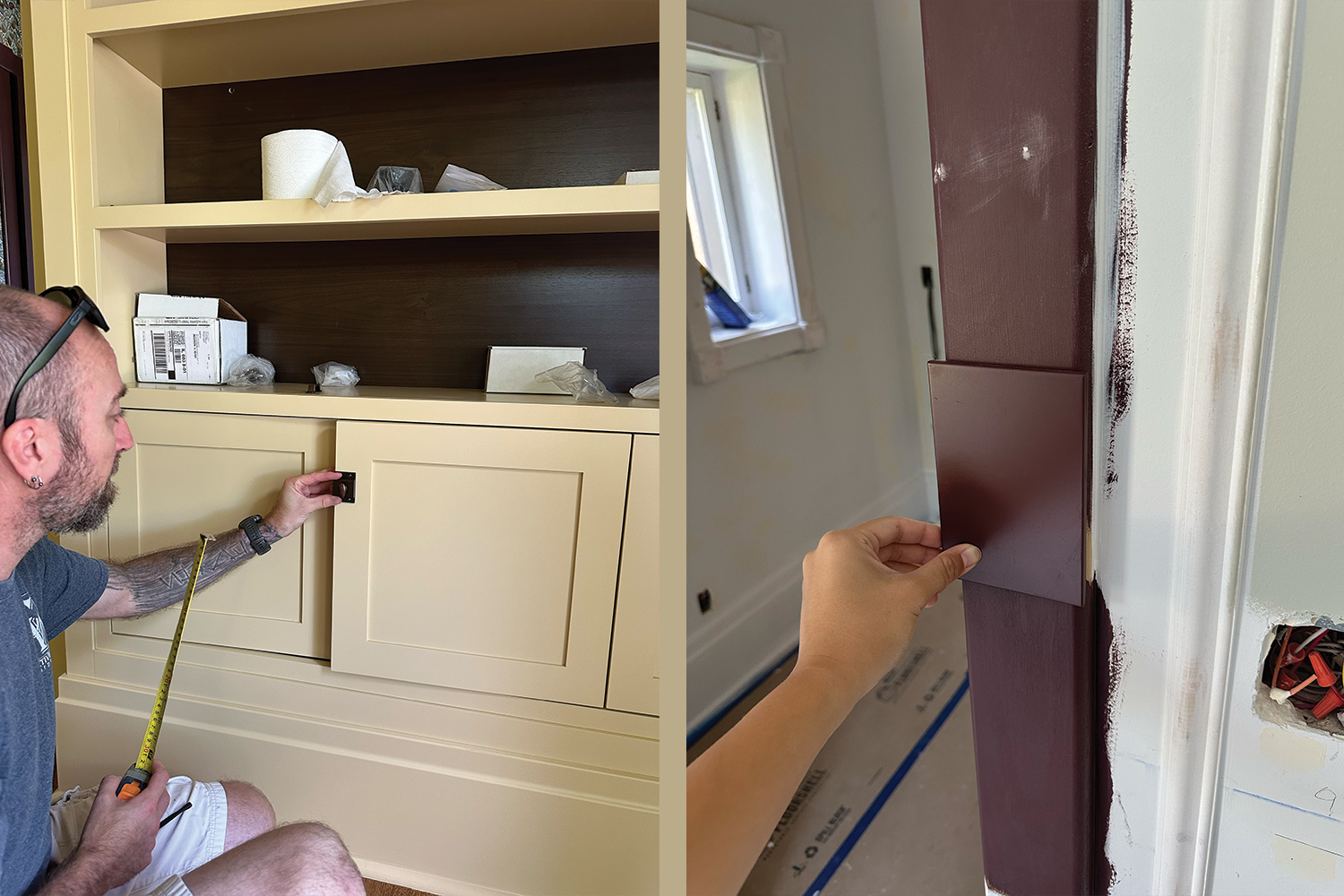
Determining hardware placement and paint color match on site.
What is the Place of AI in the Interior Industry?
Now, that’s not to say AI won’t completely revolutionize my workflow. It’s already having an impact and I am so eager for it to get better. Here’s an example. I used to have to map fabrics onto furniture frames myself in photoshop and it took forever and rarely looked good, especially with patterned fabrics. Yesterday, I asked chatGPT to apply this fabric onto this chair. See the results below. Amazing!
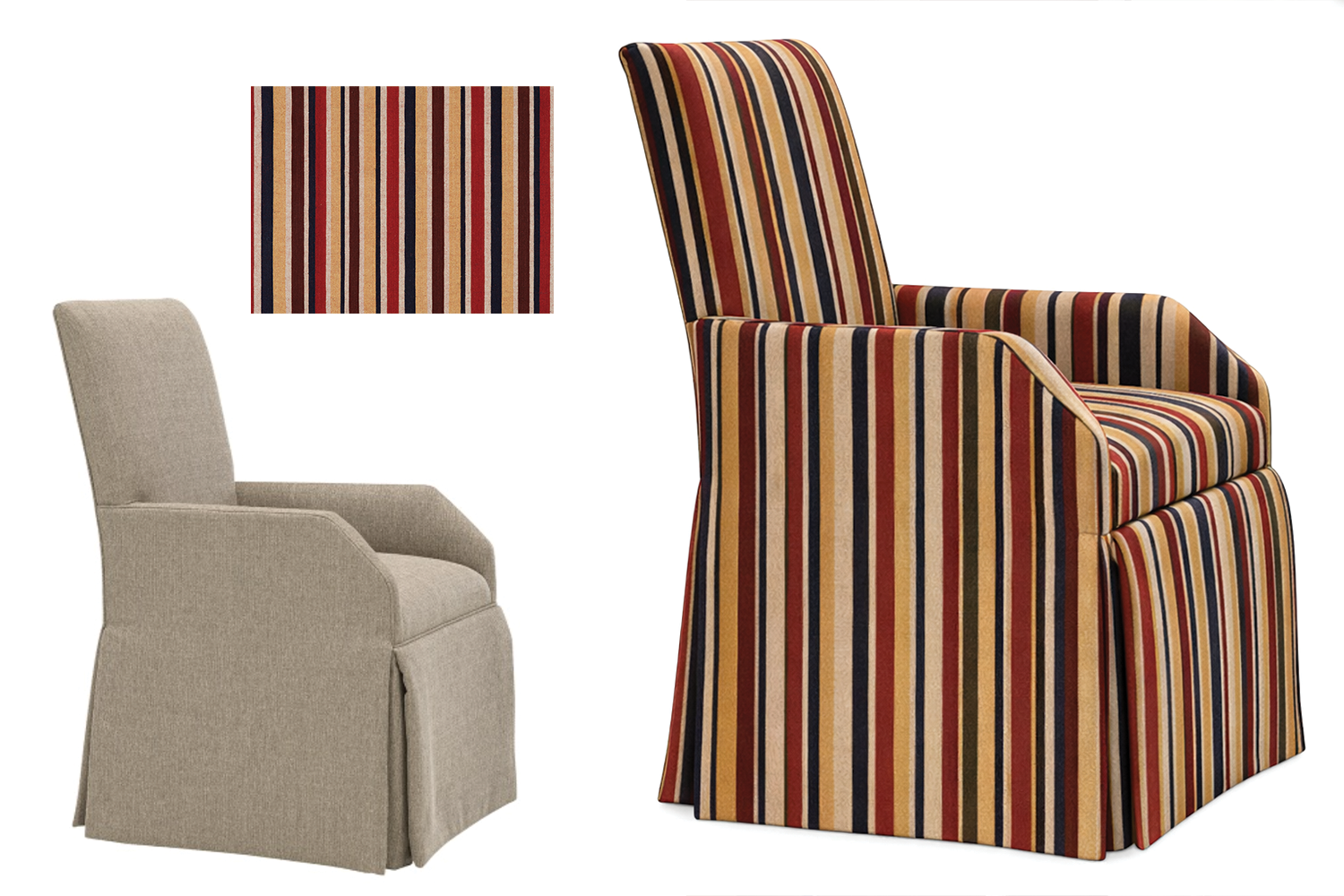
ChatGPT rendered this fabric onto this chair with great results the first time.
However, then I asked it to change the fabric to this playful check and it failed to get the scale right. I tried for an hour to get it to do it— I was so determined. I gave it dimensions for both the chair and the fabric and the repeat info. I marked up the fabric to show the repeat. I tried to communicate it so many times because I saw what it was capable of, but it never got it. And that, was a waste of time.
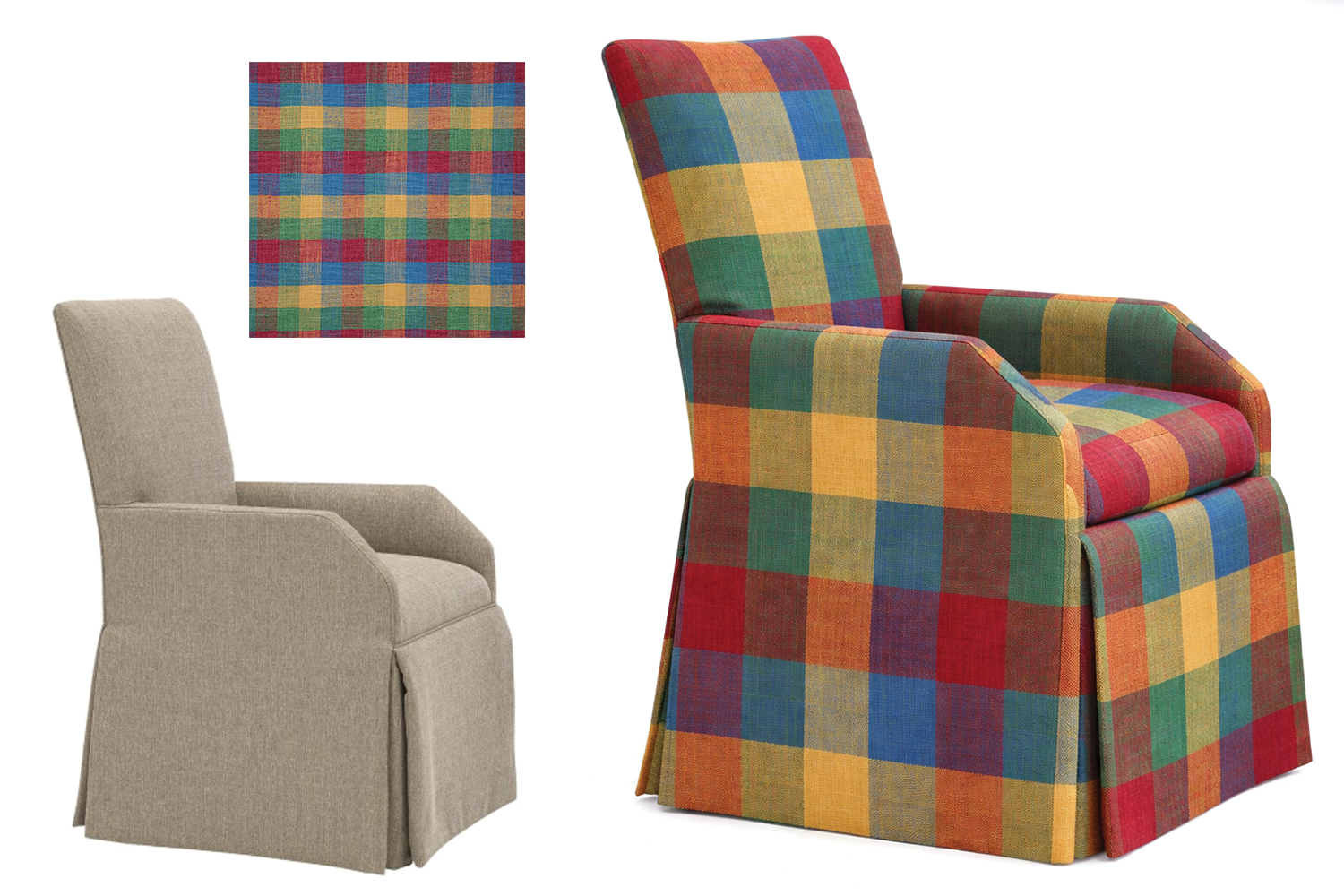
ChatGPT’s render of this chair with the checkered fabric at the wrong scale.
But someday, it will do this flawlessly, I’m sure of it. And that will be a huge help! Some day, it will create beautiful renders that are accurate, but for now, I’m still using a human render artist to get the details right. It will be a game-changing tool, no doubt.
Maybe it’s naive, but I’m not scared for the future of my business. When it comes to home, I think we will continue to want to be surrounded by the things that remind us of our humanity.